
Supporting the Club in Every Role: A Conversation with Jo Higgon
Jo Higgon has been a familiar face at Harwich, Dovercourt and Parkeston Swimming Club for many years. A former Head Coach and now Assistant Head Coach, Jo has played a central role in developing generations of swimmers at the club.
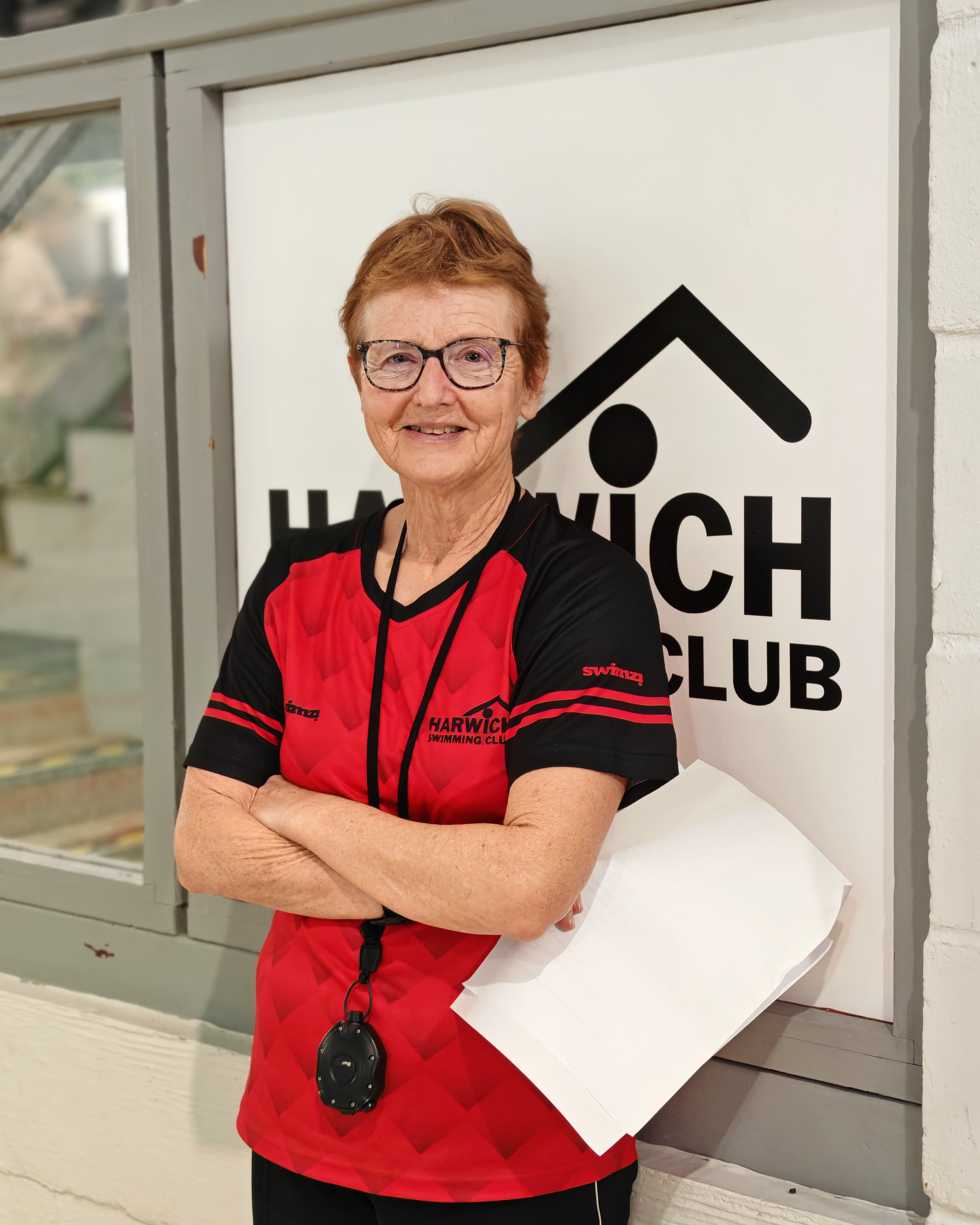
- Favourite stroke
- Freestyle
- Coaching focus
- Supporting swimmers to develop skills, confidence and enjoyment of the sport
- Years involved with the club
- 37
Few people have seen the club evolve over time quite like Jo Higgon. Having been involved with Harwich, Dovercourt and Parkeston Swimming Club for decades, Jo has coached countless swimmers and played a key role in the development of the club.
Previously serving as Head Coach, Jo now supports the coaching team as Assistant Head Coach, bringing a wealth of experience and knowledge to poolside. Her long-standing involvement with the club means she has helped guide swimmers at every stage of their development, from their first competitive races through to representing the club at higher levels of competition.
We asked Jo a few questions about her time with the club, her experiences as a coach, and what continues to motivate her after so many years in the sport.
Interview Questions
1. You have been involved with Harwich Swimming Club for many years. How did you first become involved with the club?
I have been involved with the club since 1989. The reason I became involved was because my children swam with the club. My eldest son gained a county time at 10 but somehow he got overlooked and the Club didn’t enter him. This oversight made me determined it wouldn’t happen again so I got involved. My first role was membership secretary. In those days it was all paper with index cards – no computers.
2. Over the decades you’ve been coaching, how have you seen the club change and develop?
The Club has gone through peaks and troughs over the years depending on the Head Coach. Since the early days, the Club has become more inclusive and has more qualified coaches than ever so that the Head Coach has more support than ever before. The Club has a family feel about it now with everyone pulling together to achieve the best outcomes for our swimmers.
3. You previously served as Head Coach and are now Assistant Head Coach. How has your role evolved over time?
When I was Head Coach the first time, I was coaching three nights a week, updating records and personal bests, picking teams, typing up results and travelling with the team to galas. This was on top of a full time job. As Assistant Head Coach and retired from full time employment, I have more of a supportive role to Katie, trying to take some of the pressure off her and helping to ensure that the club rolls on as efficiently as possible, sorting out skills session and coaches rotas and being poolside 3 to 4 times a week as well as attending as many galas/opens as I can.
4. What do you enjoy most about coaching swimmers at Harwich?
I enjoy coaching our swimmers as they are such a lovely bunch. Most have a good work ethic, are polite and enthusiastic and appreciate what we do for them. They really are like a big swim family. Other clubs say how well behaved and polite our swimmers are and they really are!
5. Having coached for so long, what do you think are the most important qualities for young swimmers to develop?
Important qualities are a good work ethic, being polite and believing in themselves, which a lot of our swimmers really don’t. I also believe that swimmers should be gracious in defeat as well as victory and should support their team mates through thick and thin.
6. Are there any moments from your time with the club that stand out as particularly memorable?
So many memorable moments. My eldest son getting to the Nationals in the 12 year 100m Breaststroke; seeing both my son and daughter following me into coaching and making a very good job of it.
Winning the mini-league twice in the early 2000’s. The enthusiasm when we came back from lockdown – the friendships built between the swimmers. My grandson swimming in his first mini-league gala when he was still in groups and could only do backstroke. Most recently, being there to witness our 9/10 year old relay teams win the Essex Championships. The success my daughter is having even now in her forties going from strength to strength.
7. How important is the wider coaching team and the volunteers who help the club run?
A swimming club needs a team to be able to function. Our club is second to none. We have our wonderful coaching and teaching team, a very supportive committee and parents who volunteer at the drop of a hat to help ensure our home galas run so efficiently.
8. What keeps you motivated to continue coaching after so many years involved in the sport?
The swimmers and their enthusiasm. The thrill of the galas and the joy on the swimmers faces when they break their personal bests/records/win medals and championships.
9. What advice would you give to swimmers who are just starting their competitive swimming journey?
Work hard, but don’t overtrain. Listen to your coaches and try and implement their hints and tips. Be kind to yourselves and listen to your body. You sometimes need to be patient as you cannot get a personal best on every swim, but if you work hard it will eventually pay off.
10. Finally, what does Harwich Swimming Club mean to you personally?
Harwich Swimming Club is my swimming family. I love the enthusiasm, smiles and the buzz of our swimmers achieving their goals.
Closing
Swimming clubs are built on the dedication of volunteers who give their time and experience to support swimmers and help the club grow. Jo’s decades of involvement with Harwich Swimming Club have helped shape the club and support generations of swimmers.
Her knowledge, experience and continued commitment remain an important part of the coaching team, and the club is incredibly grateful for the time and care she continues to invest in helping swimmers develop both in and out of the water.
Harwich, Dovercourt and Parkeston Swimming Club is proud to have such a strong coaching team supporting its swimmers, and Jo’s long-standing contribution is a huge part of that story.